
A&T Respiratory offers comprehensive courses, webinars, conference and resources for mastering respiratory care.
A&T Respiratory offers comprehensive courses, webinars, conference and resources for mastering respiratory care.
Copyright © 2026 A&T Respiratory Lectures All Rights Reserved
A&T Respiratory offers comprehensive courses, webinars, conference and resources for mastering respiratory care.
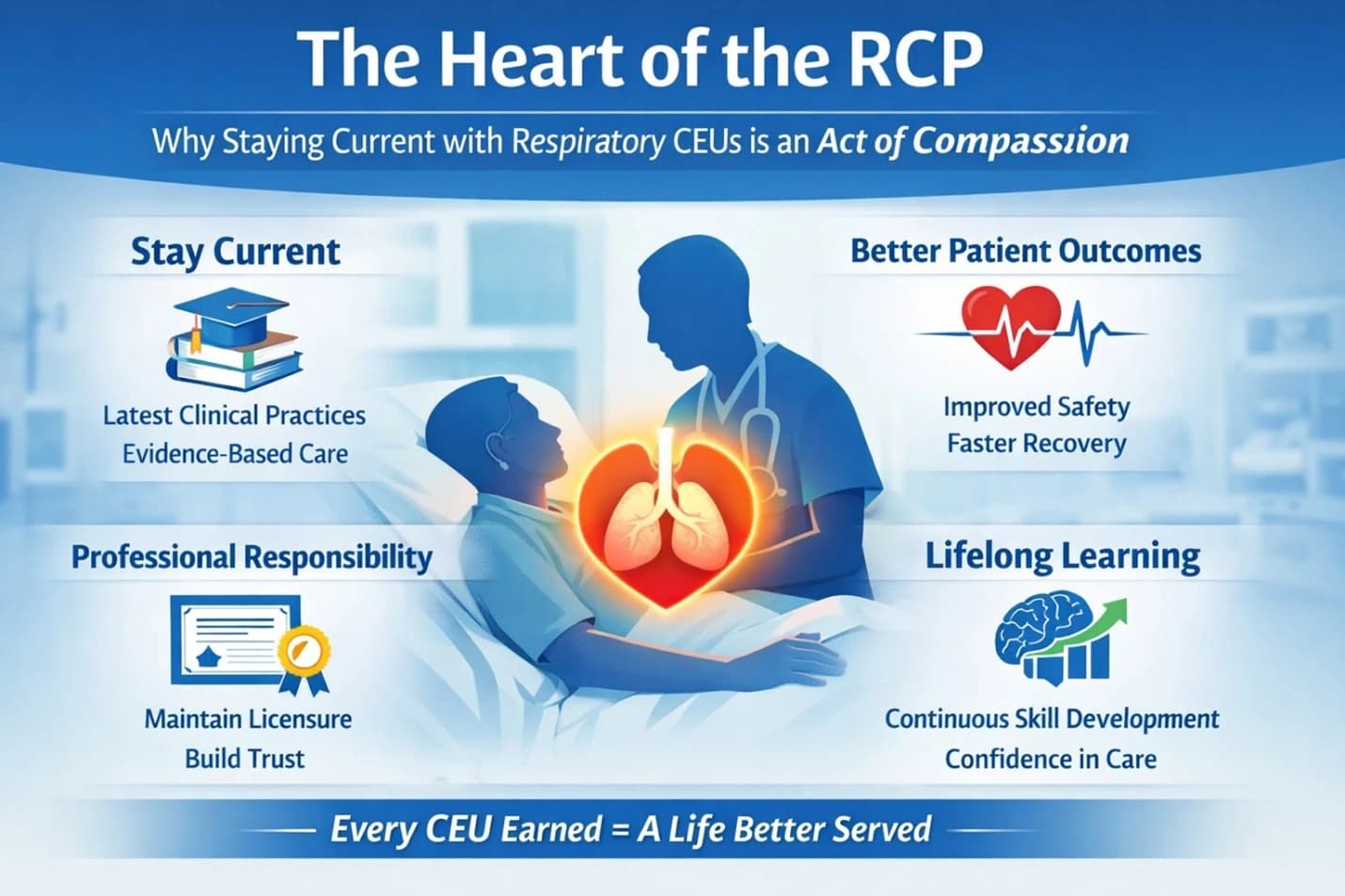
For a Respiratory Care Practitioner (RCP), the need for safeguarding each breath is a deeply human act. Patients who struggle to breathe feel fear, uncertainty, and vulnerability.
During those moments of need, an RCP becomes more than just a clinician; they also become a source of reassurance, stability, and compassion.
Compassion in healthcare goes beyond just bedside presence. It also takes commitment to learning, growing, and staying prepared to recover patients from these times of uncertainties.
This is why Respiratory CEUs are acts of responsibility and empathy, which ensure that patients receive the safest and most effective care. The heart of respiratory care is compassion, and continuing education is a part of that compassion.
Respiratory therapy is one of the most significant and fastest-evolving areas in healthcare. There have been advances in ventilator technology, treatment protocols, and diagnostic tools, which are now reshaping how we deliver care. Without the much-needed ongoing education, even skilled professionals risk falling behind.
Continuing education also allows therapists to stay aligned with current clinical standards. They can adopt new technologies faster and refine treatment approaches. This continuous learning ensures that care remains safe, effective, and evidence-based.
Today, respiratory care is employing sophisticated tools such as digital monitoring systems, portable spirometers, and smart inhaler technologies.
By staying current, you maintain your competency and also protect patient lives.
In respiratory care, even a small clinical decision has significant consequences. To keep up with evolving technologies, a respiratory care practitioner must also keep updating their knowledge, such as adjusting ventilator settings, interpreting arterial blood gases, or spotting early signs of respiratory distress.
Respiratory CEUs also support and promote this readiness. They also ensure that the respiratory therapists are well equipped to handle new challenges and work with modern standards.
Continuing respiratory education enhances knowledge and skills necessary for introducing new therapeutic and diagnostic techniques.
When RCPs invest time in education, they become better able to care for the safety and well-being of each patient.
While CEUs are associated with technical knowledge, it is also needed to strengthen empathy and patient connection.
By learning about emerging therapies, communication strategies with patients, and disease management, a practitioner can better understand what patients experience physically and emotionally.
This added knowledge also enables RCPs to communicate more effectively, give comfort to patients, and respond to crises with calmness.
Respiratory therapists also play a significant role in treatment and in educating patients and families. It is achieved by helping the practitioner understand complex respiratory conditions and participate actively in their care.
Live CEUs provide unique benefits to respiratory therapists. It encourages real-time interaction and prompt discussions with Q&A sessions. This also promotes deeper understanding and better critical thinking.
Interactive workshops and live seminars are more effective because they foster discussion and practical application of knowledge. Collective learning and collaborative discussions reinforce resilience and compassion.
Healthcare technology is reshaping respiratory care, such as using wearable monitoring devices.
These innovations increase patient outcomes but need continuous learning.
Modern tools like digital monitoring systems and smart inhalers enable early detection of respiratory conditions.
RCP collaborates closely with physicians to deliver comprehensive care. Continuing education strengthens this collaboration, which also improves communication skills, increases clinical knowledge, and also reinforces leadership abilities.
This furthermore encourages them to contribute to patient assessments, treatment planning, and disease management. This makes them the top contributors to multidisciplinary teams, which also supports disease prevention and improves patient outcomes.
Difficulty in breathing makes patients panic, and they rely on respiratory therapists for relief. To manage panic situations like this, practitioners must remain calm and confident, which can only be built through practice, repetition, and learning.
Continuing education also improves clinical judgment, improves response times, and boosts trust. This enables practitioners to ease patient anxiety and gives them hope. When patients see competence, they also feel safe.
For many RCPs, learning is a passion. Each course, seminar, and live session represents a new step towards excellent patient care. It also supports career advancement, leadership development, and provides specialization opportunities.
Furthermore, learning demonstrates respect for the profession, colleagues, and patients who depend on skilled care.
Respiratory care practitioners who commit to ongoing education bring in a range of benefits. Patients become more at ease as they receive faster and safer treatment. Families feel reassured during a crisis. Teams benefit from improved collaboration, and the medical treatments continue to evolve and improve.
Live sessions bring professionals who have a shared goal and shared purpose. They help people breathe and reduce their suffering.
For many people, compassion is just an emotion, but in healthcare, it’s a skill. It needs awareness, patience, communication, as well as clinical excellence. These skills are practiced and refined over time.
With continuing education, it also ensures that practitioners maintain their compassion and empathy. Through Respiratory Cues, practitioners acquire the emotional and intellectual strength needed to care for others.
Respiratory care is about preserving life, restoring comfort, and easing suffering. They must be attended with the utmost care and attention. Plus, skills and experience need to evolve.
Staying current with Respiratory CEUs is not just a professional responsibility — it is also an act of compassion. Being up-to-date with the right skills ensures that the patients receive the highest care.
If you’re ready to deepen your knowledge and continue practicing with compassion, A&T Respiratory Lectures provides trusted learning opportunities designed specifically for respiratory professionals at every stage of their journey.
Ongoing education empowers therapists to remain competent, improve patient safety, and also provide the highest quality respiratory care.
They offer interactive learning experiences where participants can ask questions, discuss real-life cases, and engage with instructors and peers.
It depends on the state licensing boards. They must complete the specific number of CEUs within a renewal cycle to keep their license and professional credentials active.
Yes, completing Respiratory CEUs directly contributes to better patient outcomes. Staying current with the latest treatment approaches enables therapists to make more accurate clinical decisions.