



Copyright © 2026 A&T Respiratory Lectures All Rights Reserved
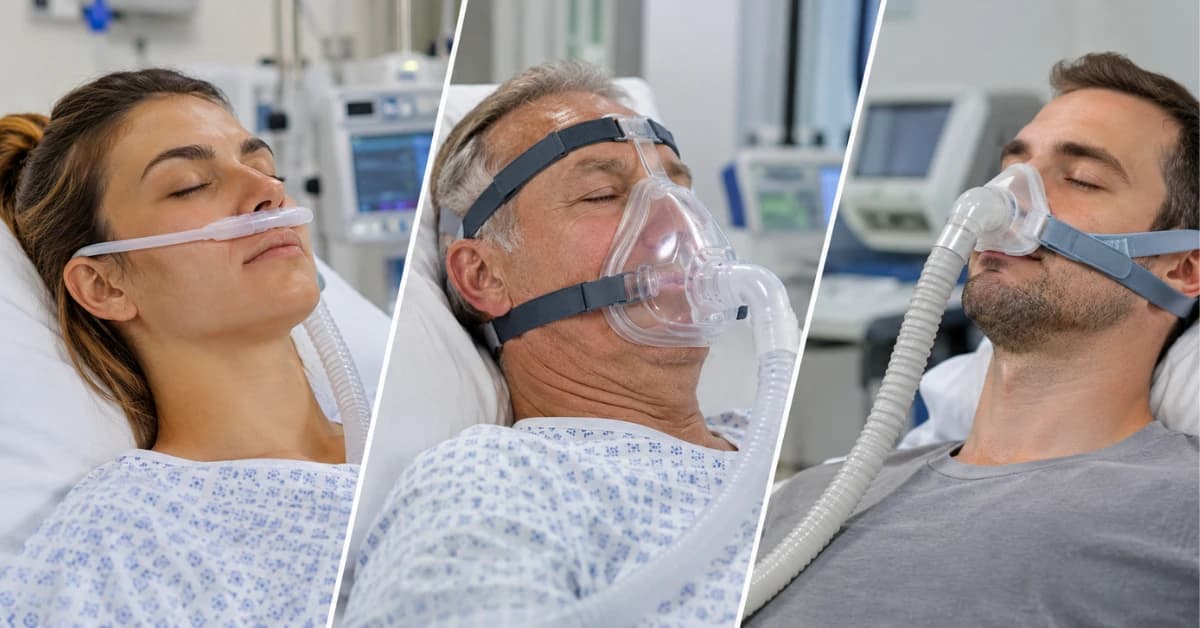
HFNC, CPAP, and BiPAP all help a struggling patient breathe, but each does a different job. HFNC gives warm, high-flow oxygen. CPAP holds the airway open with steady pressure. BiPAP adds pressure to each breath and shares the work. The right pick depends on what is failing: oxygen, ventilation, or both. Here’s a plain guide to HFNC vs. BiPAP vs. CPAP so you can match the device to the patient with more confidence.
A quick side-by-side makes the rest easier to follow.
Picture HFNC as a gentle oxygen upgrade, CPAP as a steady hand on the airway, and BiPAP as extra help for tired breathing muscles.
Every good choice starts here. A patient with low oxygen and normal carbon dioxide has an oxygenation problem. Pneumonia and fluid in the lungs are common causes.
A patient with high carbon dioxide and low pH has a ventilation problem. A COPD flare is a classic example. The breathing muscles tire out and can't clear carbon dioxide.
Many patients have both. An arterial blood gas helps sort it out, along with the effort you see at the bedside. Oxygen problems often respond to HFNC or CPAP. Ventilation problems often need the pressure support that BiPAP gives.
HFNC fits a patient who is working hard but still moving air well. It is easy to wear. People can talk, sip, and cough, and that comfort helps them stay on it.
Adults with pneumonia or other low-oxygen problems often do well. Infants with bronchiolitis are another common group. HFNC also helps keep oxygen up during intubation.
The limit is ventilation. If carbon dioxide keeps climbing, HFNC won't fix it. Watch the trend. The ROX index, which combines oxygen saturation, FiO₂, and breathing rate, can help flag patients who are not improving.
CPAP works best when airways or air sacs collapse. Patients with acute heart failure and fluid in the lungs often improve fast, since the pressure helps move fluid out of the air sacs and eases strain on the heart. It is also the usual treatment for obstructive sleep apnea.
Newborns with respiratory distress often start on nasal CPAP because it keeps tiny air sacs open.
CPAP does not add pressure to each breath. So it helps oxygen more than it helps carbon dioxide. A patient who tires out on CPAP may need BiPAP.
BiPAP boosts every breath. The gap between the two pressure levels does part of the work, so tired muscles get a rest. That makes it a first choice for COPD flares with high carbon dioxide and low pH. It also helps patients with neuromuscular disease and obesity hypoventilation.
Settings need care. Pressure that is too low won't help. Pressure that is too high causes leaks and discomfort. Mask fit makes a big difference, so check the seal early.
Not everyone can use a mask or nasal device safely. Take extra care with patients who are not breathing on their own, can't protect their airway, or can't clear heavy secretions. Vomiting, facial trauma, and severe agitation raise the risk. So does unstable blood pressure or heart rhythm.
If a patient is getting worse, don't wait too long to escalate. Delayed intubation can do more harm than the device did good. Your unit protocol and the physician's orders set the limits.
Most patients should show some improvement within the first hour or two. Keep an eye on:
A patient who looks worse after an hour is telling you the device is not enough.
Not quite. Protocols and habits differ from one hospital to the next. Some units use HFNC freely. Others move to BiPAP sooner. Both can work when the team follows the evidence and watches closely.
We hear this often from therapists who move between facilities. Continuing education for respiratory therapists helps close those gaps, since it gives you the reasoning behind each choice, not just the local habit. Our mechanical ventilation courses are a good place to build on it.
Match the support to the problem. Oxygen trouble points toward HFNC or CPAP. Tired breathing and high carbon dioxide point toward BiPAP. Reassess early, and step up when the patient shows you it's needed.
That is the heart of HFNC vs BiPAP vs CPAP. No device wins every time. At A&T Respiratory Lectures, our free CEUs and Unlimited CEUs plan give you a way to keep learning at your own pace. Pick one ventilation course this month and make it part of your steady continuing education for respiratory therapists.
When is a high-flow nasal cannula (HFNC) preferred over noninvasive ventilation?
HFNC is often preferred when a patient has low oxygen but is breathing well, with normal or low carbon dioxide. It is warm, comfortable, and easy to tolerate. Examples include pneumonia and some post-extubation cases. If carbon dioxide is high or work of breathing is heavy, BiPAP helps more.
How do CPAP and BiPAP differ in delivering respiratory support?
CPAP gives one steady pressure through the whole breath. It keeps airways open and helps oxygen levels. BiPAP gives a higher pressure on inhalation and a lower one on exhalation. That pressure difference supports each breath, so it helps remove carbon dioxide and lowers the work of breathing.
What clinical factors help respiratory therapists select an appropriate respiratory support method?
Check the gas problem first: low oxygen, high carbon dioxide, or both. Then look at work of breathing, mental status, secretions, and ability to protect the airway. Comparing HFNC vs BiPAP vs CPAP is easier with those facts in hand. Always follow your unit protocol and physician orders.
What patient conditions may benefit from HFNC, BiPAP, or CPAP?
HFNC suits pneumonia and other low-oxygen problems. CPAP helps cardiogenic pulmonary edema, sleep apnea, and newborn respiratory distress. BiPAP fits COPD flares with high carbon dioxide, neuromuscular disease, and obesity hypoventilation. Many patients overlap, so the care team decides based on gas exchange and response.
How should respiratory therapists monitor patients receiving HFNC, BiPAP, or CPAP?
Watch breathing rate, effort, oxygen saturation, heart rate, and mental status. Check blood gases when ordered, plus mask fit, leaks, and skin. Reassess early and often. Regular continuing education for respiratory therapists keeps those monitoring skills sharp and helps you spot failure before it becomes an emergency.
Respiratory care changes fast. At A&T Respiratory Lectures, we want to help you stay ahead.
Our articles are great for everyone. Experienced therapists use them to improve patient care. Newcomers use them to grow their careers. We provide the tools you need to succeed.